
Radial Shock Wave Therapy
For stubborn tendon and muscle pain, like heel pain or tennis elbow. Non-invasive and needle-free, given by your physio as part of your physio session.
$75ACC session incl. physio · from $35 with a 10-session card
Your physio assesses you first to check shockwave is right for your condition. Results vary.
What is it?
Pressure waves that reach the sore spot
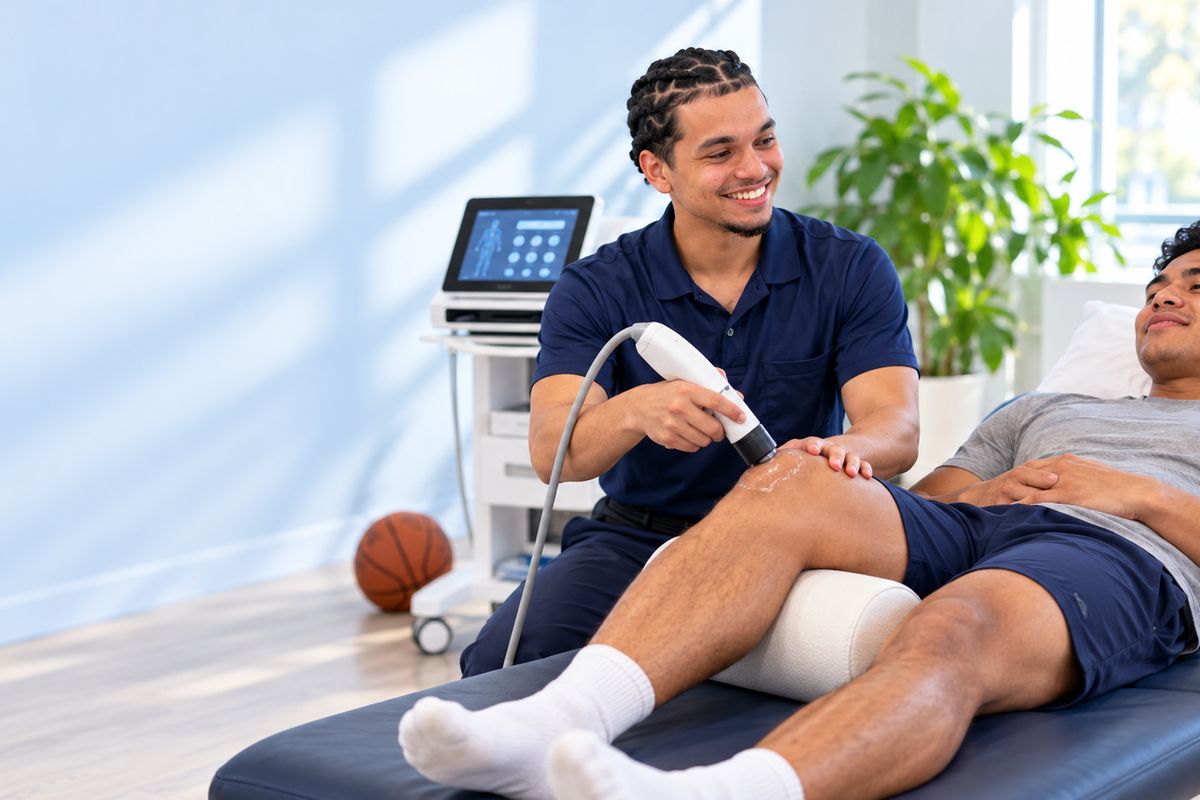
Radial shock wave therapy sends acoustic pressure waves through the skin into tendons, fascia and muscle. It’s surgery-free, needle-free and needs no anaesthetic, and our physio uses it alongside your exercise programme.
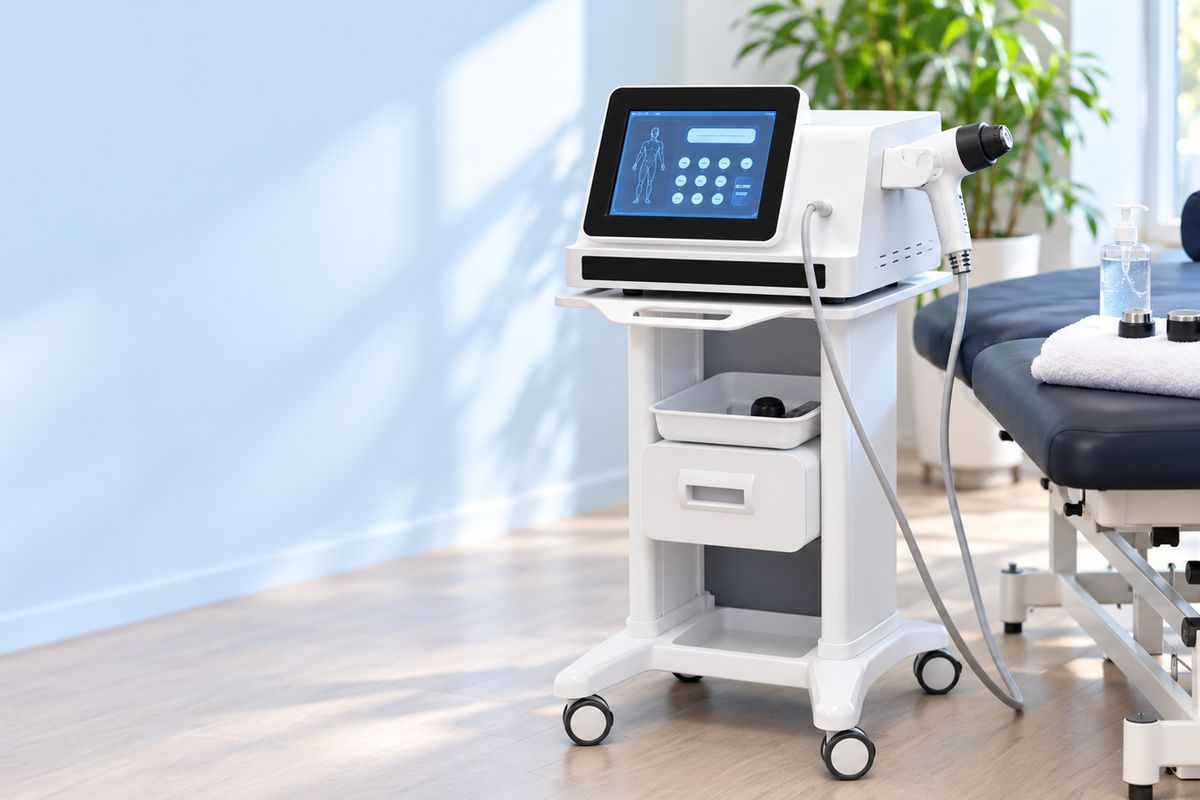
Our machine has settings for each body area, including shoulder, elbow, hip, knee, foot and ankle, and lower back, so your physio can tailor each treatment to you.
Non-invasive
No surgery, needles or anaesthetic.
Minimal downtime
Short sessions, and you can carry on with your normal day.
Works with your rehab
Pairs with your physio exercises, especially when progress has stalled.
Commonly used for
Long-lasting tendon and muscle pain
Heel pain (plantar fasciitis)
Ongoing pain under the heel, often worst with your first steps in the morning.
Achilles tendon pain
Pain and stiffness at the back of the ankle, usually from overuse.
Tennis elbow
Pain on the outside of the elbow when gripping or lifting.
Calcific shoulder tendinopathy
Calcium deposits in the shoulder tendons causing pain and limited movement.
Jumper’s knee
Pain in the tendon just below the kneecap, often from running or jumping.
Muscle knots and tightness
Trigger points causing local pain, stiffness and reduced movement.
Also used for outer hip pain and shin splints. Research support is strongest for heel pain and calcific shoulder tendinopathy.
What to expect
How a course of shockwave works
Assessment
Your physio confirms what’s causing your pain, checks your medical history and makes sure shockwave is safe for you.
Your plan
We set the treatment strength and number of pulses to suit your condition.
5–15 minute treatment
Gel goes on the skin and the handheld applicator is moved over the sore area. We check your comfort throughout.
A short course
Usually 3–5 sessions about a week apart, alongside your exercise programme. We review your progress as you go.
Prices
Shockwave prices
Every shockwave session includes your physio treatment.
ACC patients
Save with an ACC Shockwave Membership Card
Valid while your ACC claim is active.
Book nowPrivate patients
Your first visit is a physio assessment; shockwave starts from your follow-up.
Save with a Private Shockwave Membership Card
Valid for 12 months.
Book nowSavings compared with paying per follow-up session. Prices subject to change.
Questions
Good to know
Does it hurt?
You’ll feel a strong tapping, and it can be uncomfortable over the sore spot. Your physio adjusts the strength to what you can tolerate.
Are there side effects?
Most are mild and pass quickly:
- Redness, minor bruising or swelling where it was applied
- Soreness for 24–48 hours afterwards
Who shouldn’t have shockwave?
Your physio checks this before your first treatment. Let us know if any of these apply to you:
- You’re pregnant
- An infection or tumour at the treatment area
- Blood-thinning medication or a bleeding disorder
- A pacemaker or implant near the treatment area
- A steroid injection in the area in recent weeks
- Children and teens whose bones are still growing
What should I do after treatment?
Carry on with your normal day and keep up your exercises. For 48 hours, avoid intense exercise or heavy use of the treated area, and don’t take anti-inflammatories unless your physio or doctor says it’s OK.
Call us if you have severe or worsening pain, a lot of swelling or bruising, numbness or tingling, or signs of infection like heat, spreading redness or a fever.
When will I notice a difference?
Most people improve gradually over several weeks after their last session. Results vary from person to person.
Is it available for ACC patients?
Yes. ACC patients pay $75 per session, which includes your physio treatment and shockwave. Membership Cards bring this down to as little as $35 per session.
Do the membership cards expire?
ACC cards can be used for as long as your ACC claim is valid. Private cards are valid for 12 months from purchase.
Ready to get moving again?
Hunters Plaza, 11/217 Great South Road, Papatoetoe 2025. Open 7 days. English · 中文 · हिन्दी